The phrase sounds harmless.
It’s common.It’s normalized.It’s even celebrated.
But the word “cheat” carries psychological weight most people don’t recognize.
And that weight matters.
What the Word “Cheat” Actually Implies
To cheat means:
You broke rules
You did something wrong
You lacked discipline
You betrayed a system
So when someone says:
“I had a cheat meal.”
What they often feel is:
Guilt
Loss of control
“I blew it” thinking
A need to compensate
That’s not nutrition science.
That’s shame psychology.
And shame is a terrible long-term strategy.
Food Is Not a Moral Category
There is no “good” food.There is no “bad” food.
There is:
Higher-calorie food
Lower-calorie food
Higher-protein options
Lower-protein options
Meals aligned with your goals
Meals chosen for enjoyment
But morality?
That’s something we layer on top.
When you label a meal as a “cheat,” you subtly reinforce the idea that nutrition is a test of character instead of a strategic decision.
And that’s where the all-or-nothing cycle begins.
The All-or-Nothing Trap
The “cheat meal” mindset feeds this pattern:
Monday: PerfectWednesday: RestrictiveFriday: “I deserve it”Weekend: SpiralMonday: Start over
This is why so many people feel like they’re constantly “getting back on track.”
But sustainable fat loss doesn’t work like that.
It works through:
Consistency
Flexibility
Structure
Adjustments — not punishment
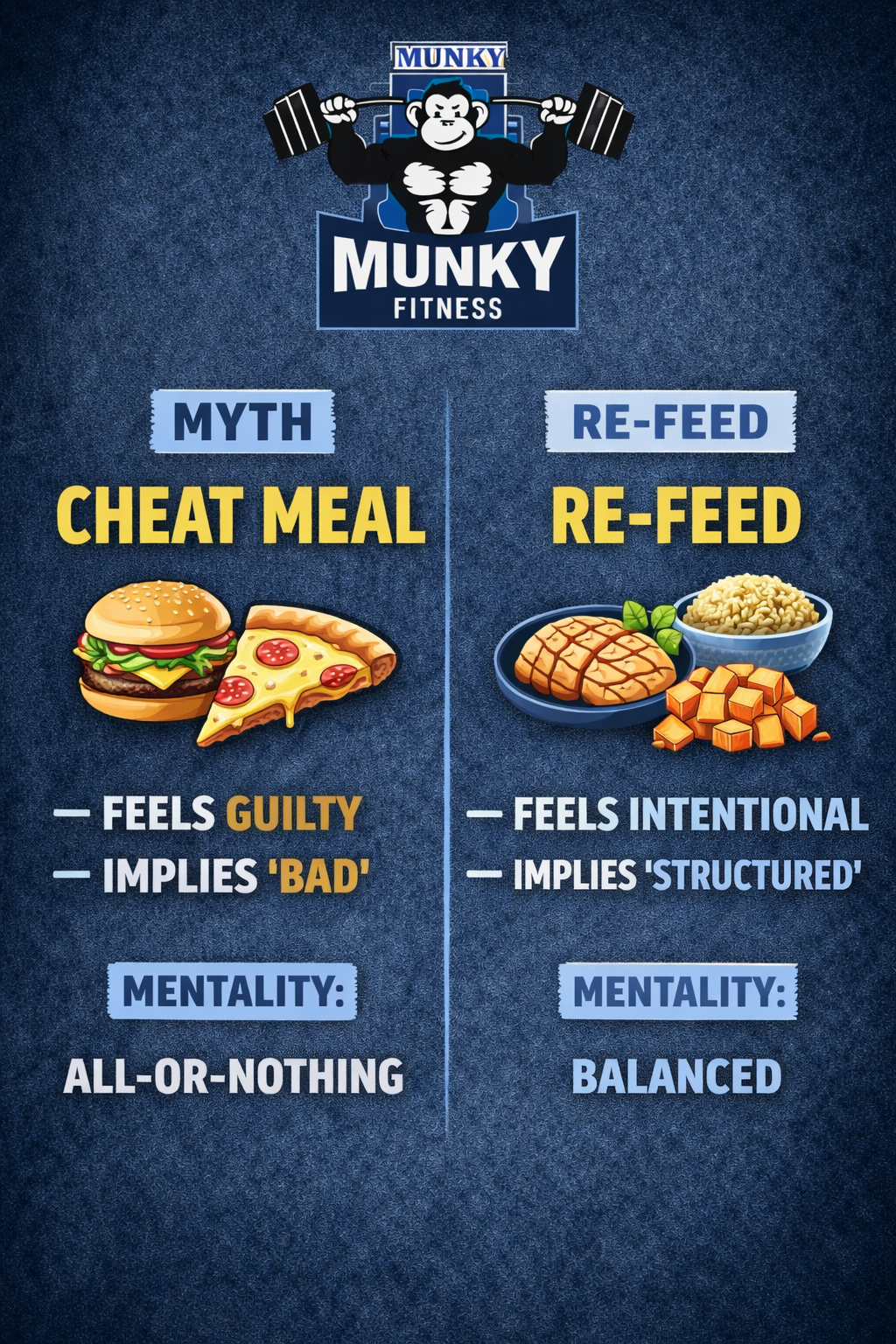
A Better Framework: Structured Re-Feeds
Instead of a “cheat meal,” consider this approach:
A structured re-feed.
A re-feed is:
Planned
Intentional
Strategically higher in calories (often carbs)
Designed to support performance and adherence
It doesn’t imply failure.
It implies structure.
It says:
“I’m making a decision inside my plan.”
That subtle language shift changes everything.
Sustainable Fat Loss Requires Flexibility
If one meal completely derails your progress…
The plan was probably too rigid.
A realistic system accounts for:
Travel
Social events
Birthdays
Stress spikes
Real life
When your system expects flexibility, you don’t need to “cheat.”
You just adjust.
What Actually Drives Results
Not perfection.Not extreme restriction.Not guilt.
Results come from:
Clear weekly priorities
Adequate protein
Consistent calorie awareness
Honest adjustments
Zero drama
The people who win long-term don’t avoid enjoyable food.
They remove shame from the process.
Language Shapes Identity
If you repeatedly call yourself someone who “cheats,”your brain builds a narrative around inconsistency.
If you frame your decisions as intentional and structured,you reinforce ownership.
That’s not semantics.
That’s behavior psychology.
Final Thought
You don’t need a cheat meal.
You need a system that doesn’t collapse when life happens.
If your nutrition approach makes you feel guilty for being human,it’s not sustainable.
And sustainability is the only thing that actually works.

.jpg)